
Riverside sits far enough inland that it regularly runs ten to fifteen degrees hotter than coastal Southern California cities just an hour or so away, and this gap is not just a matter of comfort. The Inland Empire’s sustained summer heat accelerates the breakdown of nearly every fluid in a vehicle, from engine oil to brake fluid, at a rate that a milder coastal climate simply does not produce. Understanding why these fluids degrade faster here, and which ones deserve the most attention, helps Riverside drivers avoid the kind of gradual, hidden wear that eventually turns into an expensive repair.
Why Inland Heat Is Genuinely Different From Coastal Heat
Coastal Southern California benefits from ocean influence that moderates temperatures even during summer, but that cooling effect fades considerably by the time you reach Riverside and the surrounding Inland Empire. Local summer highs regularly climb well past a hundred degrees, and unlike a coastal city that might see a handful of genuinely hot days each year, Riverside experiences sustained, consecutive weeks of this kind of heat. Fluids inside a vehicle do not get much of a break during this stretch, since even overnight temperatures often stay warm enough that a parked engine never fully returns to a cool baseline before the next day’s heat begins building again.
How Sustained Heat Breaks Down Engine Oil Faster
Engine oil is formulated to maintain its protective properties within a certain temperature range, and prolonged exposure to extreme heat accelerates the oxidation process that causes oil to break down, thicken, and lose its ability to lubricate effectively. Riverside’s sustained inland heat means oil here works harder for longer stretches than the same oil would in a coastal city, which is part of why sticking strictly to a manufacturer’s standard interval, calculated with more moderate conditions in mind, can leave Riverside engines running on oil that has already lost some of its protective capacity before the next scheduled change.
Why Transmission Fluid Faces Similar Accelerated Wear
Automatic transmission fluid relies on maintaining proper viscosity to lubricate internal components and enable smooth shifting, and sustained heat exposure degrades this fluid in much the same way it affects engine oil. Riverside’s combination of inland heat and, for many commuters, meaningful stop and go traffic on routes like the 91 or the 60 freeway, generates additional heat from shifting on top of the ambient temperature the fluid already has to contend with, compounding the wear beyond what heat alone would cause.
Brake Fluid Deserves More Attention Than Most Drivers Realize
Brake fluid is hygroscopic, meaning it naturally absorbs moisture over time, and this absorbed moisture lowers the fluid’s boiling point. In a climate where brakes already run hotter due to sustained ambient heat, a compromised boiling point becomes a more meaningful safety concern than it would be in a milder climate, since brake fluid that boils under hard use can create a spongy, less effective pedal exactly when full stopping power matters most. Riverside’s heat means this degradation happens somewhat faster here, making brake fluid checks worth including in a more frequent inspection routine than many drivers currently follow.
Coolant And Power Steering Fluid Face Their Own Heat Related Decline
Coolant naturally loses some of its protective and heat transfer properties over time, and this process accelerates when a cooling system is working overtime to manage Riverside’s sustained summer heat. A coolant mixture that would comfortably last its full service interval in a milder climate may need attention sooner here, since the fluid itself is under more consistent thermal stress throughout a Riverside summer.
Power steering fluid, often overlooked entirely until a problem develops, can also break down faster under sustained heat, sometimes contributing to a steering system that feels less smooth or slightly noisier than it should. If you have experienced a starting issue that seemed connected to heat exposure, our guide on the top 10 reasons your car won’t start and how to get back on the road covers a range of causes, several of which can be traced back to the kind of heat accelerated wear common throughout the Inland Empire.
Why Riverside Drivers Should Check Fluids More Often Than The Standard Schedule
Manufacturer recommended fluid change intervals are generally calculated using more moderate testing conditions than what Riverside’s sustained inland heat actually produces. Checking oil condition, transmission fluid color and smell, brake fluid clarity, and coolant condition somewhat more frequently than the standard schedule suggests gives Riverside drivers a realistic chance of catching degraded fluid before it contributes to a bigger mechanical issue.
It is worth thinking about this in terms of actual driving conditions rather than the calendar alone. A vehicle that spends most of its time on inland freeways during the peak heat of summer afternoons is accumulating fluid degradation at a different rate than one driven primarily in the cooler evening hours, even if both cover similar mileage. Being honest with a technician about when and how a vehicle is typically driven helps ensure the recommended check schedule actually reflects the conditions that vehicle faces rather than a generic average.
Signs Your Fluids May Already Be Breaking Down
Oil that looks unusually dark or smells burnt before your next scheduled change, a transmission that shifts less smoothly than it used to, a brake pedal that feels spongier than normal, or a steering wheel that feels less responsive are all worth having checked. Catching these signs early generally means a straightforward fluid service rather than a more involved repair once degraded fluid has already contributed to component wear.
Why A Mobile Mechanic Fits Riverside’s Climate Reality
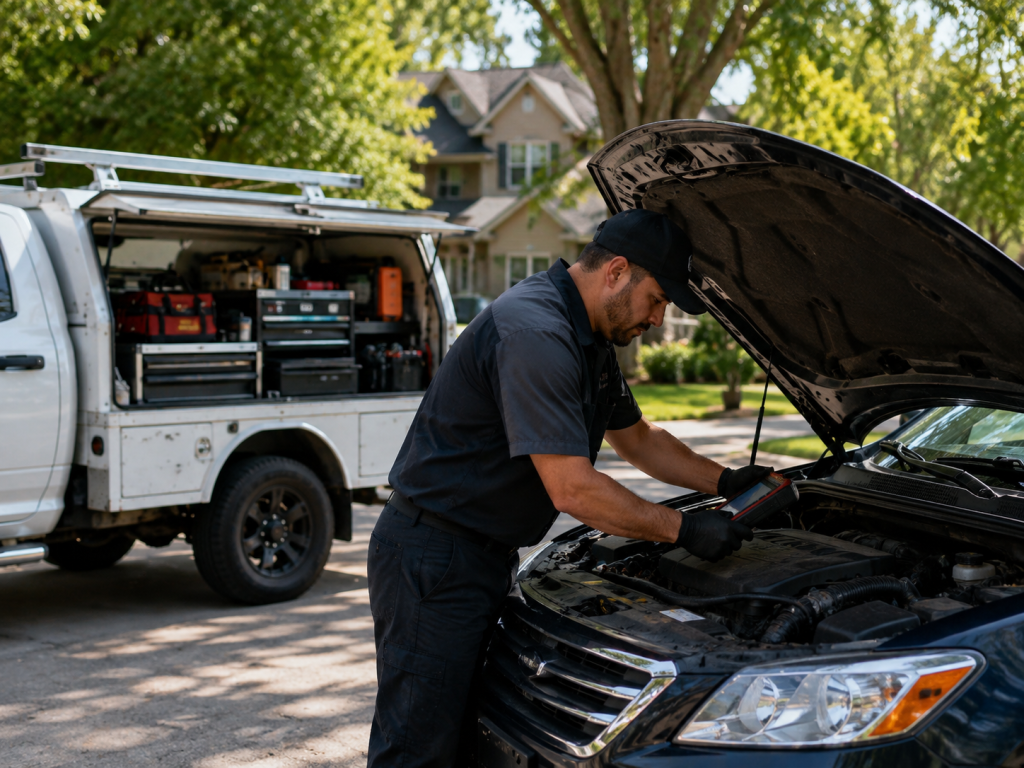
A technician who regularly services vehicles throughout the Inland Empire understands how much faster heat breaks down fluids here compared to coastal Southern California, and can recommend a more realistic check schedule based on actual local conditions rather than a generic manufacturer guideline. A mobile mechanic can check and service multiple fluids in a single visit at your home or workplace, saving you a trip during some of the hottest stretches of the year.
We covered the broader advantages of this approach in our article on why mobile mechanics are better than traditional auto shops in Riverside, which explains how convenience and local familiarity come together, particularly useful for the kind of frequent fluid checks Riverside’s climate genuinely requires.
Stay Ahead Of What Inland Heat Does To Your Fluids
Riverside’s inland heat is significantly more demanding on vehicle fluids than the milder coastal climate just an hour away, and staying ahead of this accelerated breakdown is one of the simplest ways to avoid a more serious mechanical issue down the road. Fluids are, in many respects, the easiest part of a vehicle to check proactively, which makes this an especially worthwhile habit to build compared to some of the more involved inspections a car occasionally needs.
If it has been a while since your fluids were checked, visit our homepage to learn more about our services, or reach out through our contact us page to schedule a visit at your home or office anywhere in the Riverside area.
A little proactive attention now can help your car’s fluids hold up against everything another Inland Empire summer is about to bring.