
You turn the wheel to pull out of a parking space and it takes more effort than it used to. Or the steering feels fine on the road but gets stiff in a tight turn, or after the car has sat overnight. Heavy steering is one of those problems that is easy to put off, because the car still drives. But steering is a safety system, and a change in how it feels is a sign that something needs attention. This guide explains the common causes of hard steering, what each one tends to feel like, how the problems are usually fixed, and when to stop driving. If you are dealing with heavy steering in Richmond, VA, it will help you describe the symptoms and decide what to do next, including when a mobile mechanic can handle power steering repair at your home or workplace.
How Power Steering Works
Turning the front wheels of a car by hand would take real muscle, so almost every modern vehicle uses some form of power assistance. Older systems are hydraulic. A pump driven by the engine pushes fluid through a hose to a steering gear or rack, and that pressure does most of the work when you turn the wheel. Many newer vehicles use electric power steering, where an electric motor and sensors provide the assistance, with no pump or fluid at all. Some vehicles use a combination. Which system you have matters, because the causes of heavy steering differ. Your owner’s manual will tell you which type your vehicle uses.
Cause One: Low or Leaking Power Steering Fluid
On hydraulic systems, low fluid is one of the most common reasons for heavy steering. The fluid works in a closed system, so if the level is low, there is usually a leak. Common leak points include hoses, hose connections, the pump, and the seals on the steering gear. Signs of a low fluid problem include:
- Steering that is stiff, especially at low speeds or when turning sharply
- A whining or groaning noise when you turn the wheel
- Fluid spots under the front of the car
- A low level in the power steering reservoir
- A burning or sweet smell near the engine
Topping off the fluid may help for a short time, but it does not fix the leak. Use only the fluid type your owner’s manual specifies, since the wrong one can damage seals. A technician can find the source of the leak and repair it.
Cause Two: Old, Dirty, or Contaminated Fluid
Even without a leak, power steering fluid wears out. Over time it can darken, pick up tiny metal particles, and lose its ability to lubricate and resist heat. Dirty fluid makes the pump and steering gear work harder and can speed up wear. Fluid that looks dark, smells burnt, or contains foam or debris is a warning sign. Foamy fluid can also mean air has gotten into the system. Your owner’s manual may list a service interval for the fluid, and a technician can tell you whether yours is due.
Cause Three: A Worn or Failing Power Steering Pump
The pump creates the pressure that assists your steering. As it wears, it may not produce enough pressure, which makes the wheel harder to turn. A failing pump often announces itself with a whining or groaning sound that gets louder when you turn, steering that feels stiff when the engine is cold, or assistance that comes and goes. A pump can also fail because the fluid was low or dirty for a long time, so the underlying cause matters as much as the part itself.
Cause Four: A Loose, Worn, or Broken Belt
On many hydraulic systems, a belt turns the pump. If the belt is loose, glazed, cracked, or slipping, the pump may not spin properly and you lose assistance. A squealing noise when you start the car or turn the wheel is a common sign. A broken belt can cause a sudden loss of power steering, and since the same belt often drives other parts such as the alternator, you may see warning lights too. Our article on humid summers, cold snaps, and a Richmond driver’s car care guide explains how temperature swings and humidity wear on belts and hoses.
Cause Five: Low Tire Pressure and Tire Problems
Not every case of heavy steering comes from the steering system. Underinflated tires have more rubber on the road, which makes the wheel harder to turn, especially at low speeds. Check the pressure on all four tires when they are cold, using the number on the label inside the driver’s door jamb or in your owner’s manual, not the number printed on the tire. Uneven tire wear, mismatched tires, or a tire that is damaged can also affect how the steering feels. This is an easy check to do first.
Cause Six: Alignment and Suspension Problems
The steering system works with the suspension. Worn parts in the front end can make steering feel heavy, loose, or uneven. Common culprits include:
- Worn ball joints, which connect the wheels to the suspension
- Worn tie rod ends, which link the steering gear to the wheels
- Worn control arm bushings
- Bad wheel bearings
- Struts or shocks that are worn out
- Poor wheel alignment, which can make the car pull and the steering feel stiff
Symptoms may include clunking over bumps, a wandering feel on the road, uneven tire wear, a pull to one side, or a steering wheel that does not return to center. These parts affect control, so they should be inspected promptly.
Cause Seven: A Problem With the Steering Rack or Gear
The steering rack or steering gear is the heart of the system. Inside, seals can wear and leak, and internal parts can wear out or bind. A failing rack can cause heavy steering, a notchy or rough feel as you turn, play in the wheel, a leak near the center of the front end, and noise. Rack and gear repairs are more involved than replacing a hose or belt, and some may need a shop with a lift and specialized equipment. A technician can inspect the system and tell you what you are dealing with.
Cause Eight: A Problem With the Steering Column or Linkage
The steering column connects the wheel to the rest of the system, and it contains joints and, in some vehicles, sensors and electronics. Worn joints in the column or intermediate shaft can make the wheel feel stiff, notchy, or loose. If the steering wheel sticks or binds in the same spot, or you hear clicking or popping from the column as you turn, have it inspected soon.
Cause Nine: Electric Power Steering Faults
On vehicles with electric power steering, there is no fluid to check. Heavy steering can come from a problem with the motor, a sensor, the control module, a wiring issue, or low voltage from a weak battery or charging system. A steering warning light on the dashboard is a common sign, and some vehicles will reduce or stop assistance when a fault is detected. If a warning light comes on, a technician can scan for stored codes to find out what the system is reporting. A weak battery can also trigger odd behavior, so it is worth testing. If your car also struggles to start, our guide to the top 10 reasons your car won’t start and how to get back on the road covers the common causes.
Cause Ten: Temperature and Humidity Effects
Cold can thicken power steering fluid, which is why a car may feel stiff for the first few minutes on a chilly morning and then loosen up. That can be normal for a short time, but if the steering stays heavy or the noise does not go away as the engine warms up, there may be a problem with the fluid, pump, or belt. Heat and humidity are hard on rubber hoses and seals too, so leaks and noise can show up in summer as well.
How Heavy Steering Is Diagnosed
A good diagnosis starts with a conversation and a careful look. A technician will typically:
- Ask when the problem happens, such as at low speeds, when cold, or all the time
- Check which type of steering system the vehicle has
- Check the fluid level and condition on hydraulic systems
- Look for leaks at the pump, hoses, rack, and connections
- Inspect the belt and its tension
- Check the tire pressure and tire condition
- Inspect the front end and suspension parts for wear and play
- Scan for trouble codes if the car has electric steering or a warning light
- Test drive the vehicle when it is safe to do so
The goal is to find the actual cause instead of replacing parts by guessing.
How These Problems Are Usually Fixed
The repair depends on what the inspection finds. Depending on your vehicle, it may include repairing or replacing a leaking hose, replacing a belt, flushing and refilling the system with the correct fluid, replacing the pump, replacing worn tie rods or ball joints, repairing or replacing the rack or gear, correcting tire pressure, or having the alignment checked after front end work. On electric systems, repairs may involve a sensor, a module, wiring, or the motor. Fixing the root cause matters, because adding fluid to a leaking system or replacing a pump without finding why it failed can bring the problem right back.
When Heavy Steering Is an Emergency
Steering is not a system to gamble with. Stop driving and get help if you notice:
- A sudden loss of power assistance while driving
- Steering that locks up, binds, or will not turn
- A steering wheel that moves without the car responding properly
- A large fluid leak or a strong burning smell
- A loud grinding, popping, or clunking from the front end
- A steering warning light together with a noticeable change in feel
If your steering suddenly becomes heavy while you are driving, keep a firm grip on the wheel, slow down gradually, and pull over when it is safe. The car can still be steered without assistance, but it takes much more effort. Do not keep driving if it feels unsafe, and arrange a tow if needed.
What You Can Check Yourself
- Tire pressure on all four tires when cold
- The power steering fluid level, if your vehicle has a reservoir, using the method in your owner’s manual
- The color and smell of the fluid
- Fluid spots on the ground under the front of the car
- Dashboard warning lights
- Noises that change when you turn the wheel
Notes about what you find, and when the problem happens, will help a technician a great deal.
Can a Mobile Mechanic Fix Heavy Steering?
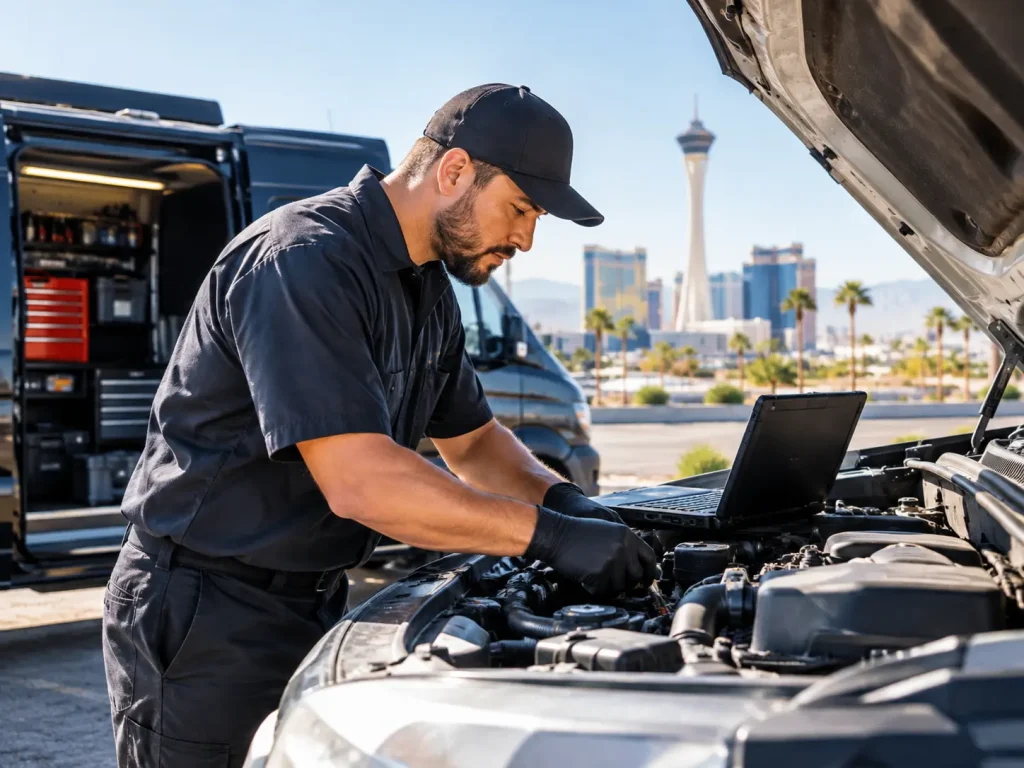
In many cases, yes. A mobile mechanic can come to your home or workplace in the Richmond area, inspect the steering system, check the fluid, belt, and tires, scan for codes, and handle many common repairs on site, such as hose and belt replacement and fluid service. That saves you from driving a car with questionable steering to a shop. Some jobs, such as a steering rack replacement, major suspension work, or an alignment, may need a full shop with a lift or specialized equipment, and a trustworthy technician will tell you honestly when that is the case. When you book, describe the symptoms, when they happen, any noises or warning lights, and your vehicle’s year, make, model, and mileage.
Do Not Wait for It to Get Worse
Heavy steering rarely fixes itself. A small leak, a worn belt, or a low tire can usually be handled with a simple repair, while waiting can lead to a failed pump, damaged rack, and a bigger bill. More importantly, a steering problem can become a safety problem fast. If your wheel feels harder to turn than it used to, have it checked.
To learn more about our services, visit our homepage. If you would like your steering inspected, reach out through our contact us page and we will come to you anywhere in the Richmond area.