
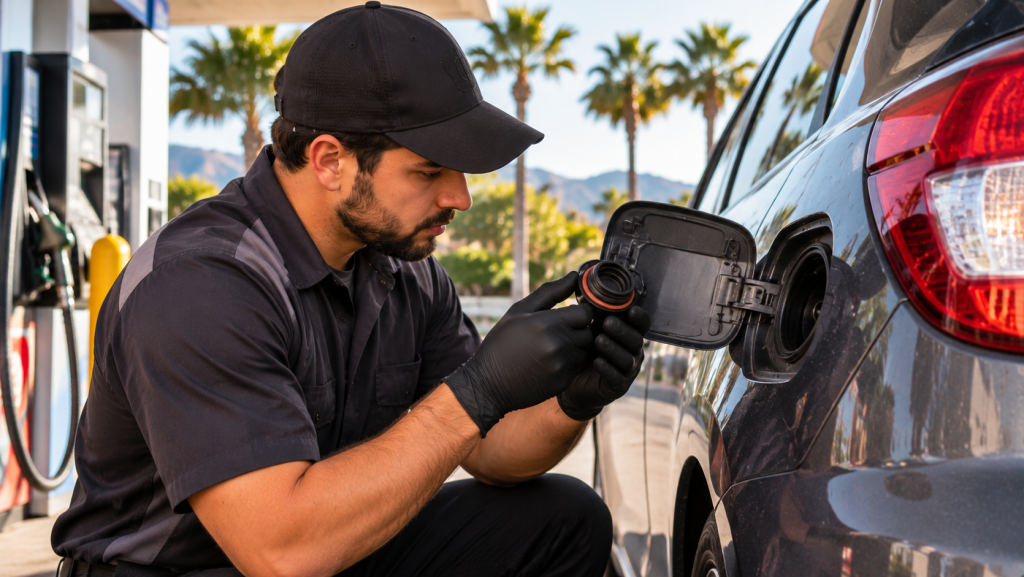
You fill the tank, pull out of the station and a few minutes later the check engine light comes on. It is a common experience, and it is more often related to what happened at the pump than people expect. The most familiar cause is a loose or damaged gas cap, but the light can also point to other parts of the evaporative emission system, usually called the evap system. This guide explains why a gas cap can trigger the light, what to try first, what else can cause the same warning, which signs mean you should stop driving and how a mobile mechanic in Riverside can diagnose the cause at your home or workplace.
Why Filling Up Can Trigger the Light
Your fuel system is designed to be sealed. Gasoline gives off vapors, and instead of letting those vapors escape into the air, the evap system captures them and routes them into the engine to be burned. To make sure the system is working, the car’s computer runs self tests from time to time. Those tests look for leaks in the system by checking whether it holds pressure or vacuum.
When you open the fuel filler, you break the seal on purpose. If the cap does not seal properly afterward, the next self test may detect a leak and store a trouble code, and the check engine light can come on. That is why the light often appears shortly after a fill up, even though the cap may not have been the original cause of anything else.
Start With the Gas Cap
The gas cap is a simple part with an important job. If the light came on soon after fueling, it is reasonable to check it first.
- Make sure the cap is on. It sounds obvious, but a cap left on the roof or the pump is easy to forget on a busy day.
- Tighten it properly. Many caps click when they are tight. Turn until you hear or feel the click, as described in your owner’s manual.
- Inspect the seal. Look at the rubber ring. Cracks, flattening, stretching or dirt can stop it from sealing.
- Check the cap itself. A cracked, warped or damaged cap should be replaced. Use a cap that matches your vehicle.
- Give it time. After you fix the cap, the light may not turn off right away, because the computer has to run its tests again. That can take several days of normal driving.
If the light stays on after the cap is secure and enough driving has passed, something else may be going on, and it is worth having the codes read.
Other Evap System Problems
The cap is just one piece of the evap system. Other parts can wear, crack or fail, and they can cause a similar warning.
- Hoses and lines. Rubber and plastic vapor lines can crack and loosen with age and heat.
- Purge valve. This valve controls when vapors are sent to the engine. If it sticks open or closed, the system may not behave as expected.
- Vent valve. This part lets fresh air into the system during testing. A fault here can set off a warning.
- Charcoal canister. It stores fuel vapors until the engine can use them. Damage or contamination can cause problems.
- Filler neck. Rust or damage near the fuel filler can keep the cap from sealing, even when the cap is fine.
- Fuel tank pressure sensor. The computer relies on this sensor during leak tests, and a faulty one can cause false alerts or hide real ones.
These parts are not always easy to reach, and finding a small leak often takes proper diagnostic equipment. Guessing and replacing parts at random can lead to repeat visits, so a scan and a leak test can save time.
Other Causes of a Light That Appears After Fueling
The timing can be a coincidence, and the light can come from something unrelated to the evap system. Possible causes include:
- Poor quality or contaminated fuel, which can cause rough running or misfires.
- Ignition problems, such as worn spark plugs or ignition coils.
- Sensor faults, including oxygen sensors and air flow sensors.
- Emission system issues, such as a failing catalytic converter.
- Electrical issues, including a weak battery or charging trouble.
Steady symptoms such as rough idle, hesitation, poor fuel economy or hard starting are clues that the cause may not be the cap. A scan tool is the way to find out, because the stored codes point the technician toward the system involved.
Is It Safe to Keep Driving?
The answer depends on how the light behaves and how the car feels.
- A steady light with no other symptoms is often less urgent, but it still deserves attention. Check the gas cap and plan a diagnosis soon.
- A flashing light is a different story. It can signal a serious misfire. Slow down, stop driving as soon as it is safe and get help, because continuing may damage the catalytic converter.
- Other warning lights, such as oil pressure or temperature, mean you should pull over and shut the engine off when it is safe.
- A strong smell of fuel is a safety concern. Fuel vapors are flammable, so do not drive the car, keep sparks and flames away and have it checked right away.
- Loss of power, stalling, loud noises or smoke also mean you should stop and get help.
Your owner’s manual explains the warning lights for your vehicle and what each one means.
What Not to Do
- Do not ignore a flashing light.
- Do not just clear the code and forget about it. The light will likely return if the cause is still there, and clearing the code also resets the car’s self tests.
- Do not replace parts by guesswork. A diagnosis is more reliable.
- Do not keep topping off the tank after the pump clicks off. Overfilling can push liquid fuel into the vapor system and cause problems.
Tips to Prevent the Light After Fueling
- Tighten the cap until it clicks every time.
- Stop fueling when the pump shuts off.
- Keep the area around the filler clean, so dirt does not get on the seal.
- Replace an old or cracked cap before it causes trouble.
- Do not ignore small warnings. A light that was easy to fix last month can become a bigger job if the car keeps running with a fault.
Other parts of your car can send mixed signals as well. For example, a steering system that feels off can be easy to mistake for another problem, which is covered in our post on why your steering feels heavy. And because California sun and long summers affect fuel system parts like hoses and seals, it helps to read how heat and weather wear on vehicles in our article on protecting your car from sun, salt and storms.
How a Mobile Mechanic Can Help
A mobile mechanic can come to your home or workplace in Riverside and begin with the codes. A scan tool shows which system set the light, and a technician can then check the cap, the visible hoses and lines and the other evap parts, and talk you through the findings. Simple fixes, such as a new gas cap or a loose connector, can often be handled on the spot. Some evap work, such as tests that need specialized smoke equipment or repairs that require the fuel tank to be lowered, may be better suited to a shop, and a good technician will tell you honestly which situation applies.
Quick Summary
- A loose or damaged gas cap is a common reason for the light after fueling.
- Tighten the cap until it clicks, check the seal and give the car time to retest.
- Hoses, valves, the canister and sensors in the evap system can also trigger the light.
- A flashing light, a fuel smell or serious symptoms mean you should stop driving.
- Do not clear codes without finding the cause.
- A scan and leak check give a reliable answer.
If your light is on and the gas cap did not fix it, we can help find the real cause. Visit the Mobile Mechanic Pros of Riverside homepage to learn more, or contact us to schedule a diagnosis.